An AI agent usually gets access to a system of record because a project is in a hurry. A team connects it to the CRM or the ticketing tool with an application programming interface (API) key, the pilot works, and the agent stays. Nobody has decided who answers for it, what it may change or how to stop it. According to Grant Thornton's 2026 AI Impact Survey, nearly three in four organisations are giving agentic AI access to their data and processes, and just 20% have a tested AI incident response plan for when it fails.
The controls exist, and several of them were part of what Cloudflare announced at Connect 2026. What is usually missing is the decisions those controls are supposed to enforce. This AI agent governance framework takes them one at a time: who settles each one, how you know you are ready, and which control applies it today. How to configure those controls is covered in Zero Trust for AI agents, and the platform itself on our Cloudflare One page.
Why does an AI agent project need decisions before tools?
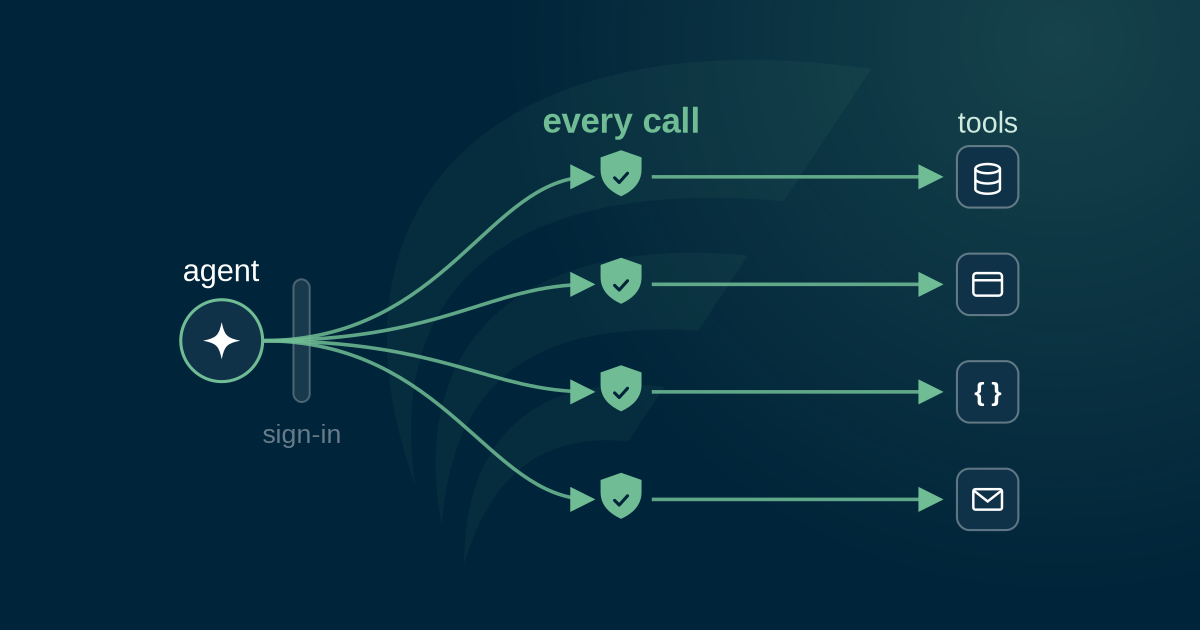
An agent doesn't just read. It acts on someone's behalf, chains calls to tools and models, and can start other agents. Checking its access when it connects tells you nothing about what it does next.
AI agent readiness is the point at which an organisation can name every agent it runs, the person accountable for each one, the systems and data it may reach, the record it leaves and the way to stop it. None of these answers comes from a product: each one is a decision with an owner.
The order we follow on projects is business outcome, then owner, then process, then technology. Take a purchase order. Before any guardrail, write down who issues it, who approves it, which system records it and where an exception goes.
Writing guardrails before the process map means guessing.
General frameworks such as the NIST AI Risk Management Framework or ISO/IEC 42001 don't go into agents in detail. Singapore's Infocomm Media Development Authority (IMDA) has published a Model AI Governance Framework for Agentic AI. Worth reading if you operate in Asia-Pacific.
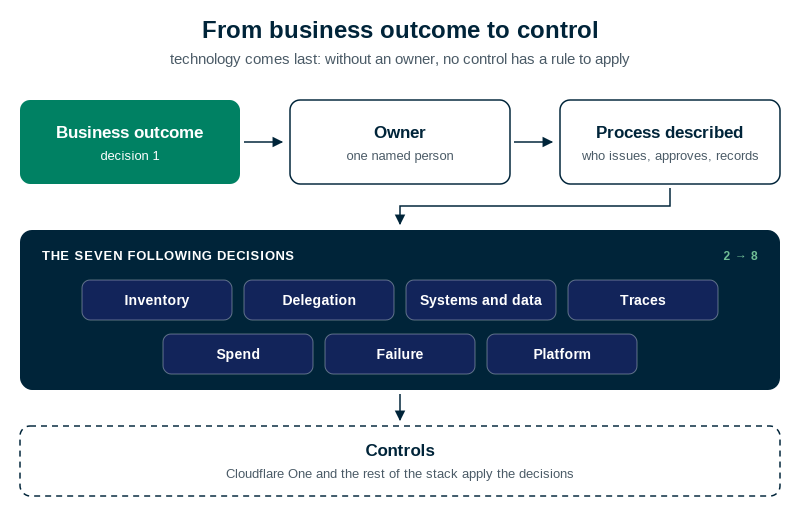
For each agent project: one business outcome and one named owner, before any access is granted.
Which agents are already running in your organisation?
You can't govern what you can't list. On our client projects, the first list is rarely complete, and some agents turn out to run with administrator rights.
Agents come from four places:
- agents you bought;
- agents built into your SaaS tools, switched on by an update or by an administrator;
- agents your teams built during a pilot, and that are still running;
- tools your employees connected themselves, including servers using the Model Context Protocol (MCP), the standard that connects an agent to tools and data, that nobody approved.
An AI agent inventory needs few fields to be useful: business owner, identity used, systems and data reached, read or write, models called, and where the logs go. You also have to decide what counts as an agent. A chatbot that answers questions and an agent that closes tickets don't carry the same risk, and the register should say which is which.
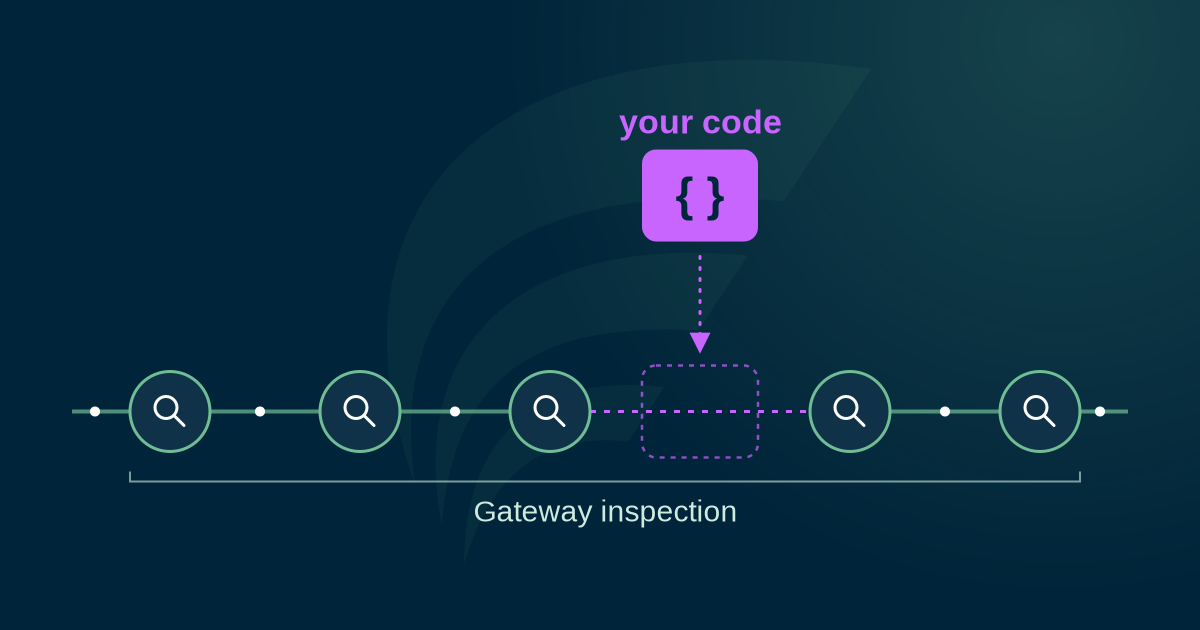
Discovery keeps the register honest. Cloudflare Gateway can recognise MCP traffic with a selector still in beta (changelog, 12 August 2026), and the AI security report shows what it found. Whatever turns up there and isn't in the register is your shadow AI; our shadow AI detection page covers the method.
Start the inventory from the credentials, not from the projects. List the API keys, OAuth applications (OAuth being the standard most tools use to grant delegated access) and service tokens issued in the last year: every agent needs one, and the ones nobody claims are the agents nobody declared.
What counts as an agent, who keeps the register, and how often it is checked against discovery.
On whose behalf does each agent act?
There are two models. A delegated agent acts with the user's rights, so it inherits their excesses too: if the user can export the whole CRM, so can the agent. An agent with its own service identity can get a narrow scope, but you then have to rebuild the trace back to whoever triggered the action.
Three questions need an answer before go-live. Which person answers for the agent's actions? Who approves a new permission? Who can revoke its access within minutes, including at night and at weekends? The counter-example we still meet: an agent whose access hangs off a developer's personal account. When that developer leaves, nobody knows what to revoke.
How to wire this up (service tokens, managed OAuth, per-tool authorisation) is in Zero Trust for AI agents. Here, the point is the choice. For the security side of autonomous agents, see agentic AI security.
A delegation model per agent, one accountable person, and a revocation path that works at night.
Which systems and data should an agent reach first?
Start where a mistake can be undone: read before write, one system before several, internal data before customer data. An agent that drafts a reply a person sends is not the same project as an agent that sends it.
Two rankings help. Rank systems by the damage a wrong write would do: knowledge base first, then ticketing, then CRM, with finance and identity systems last. Rank data by sensitivity, and decide which categories may go to which model, external models included. If your data classification is out of date, that is the first job, before any agent.
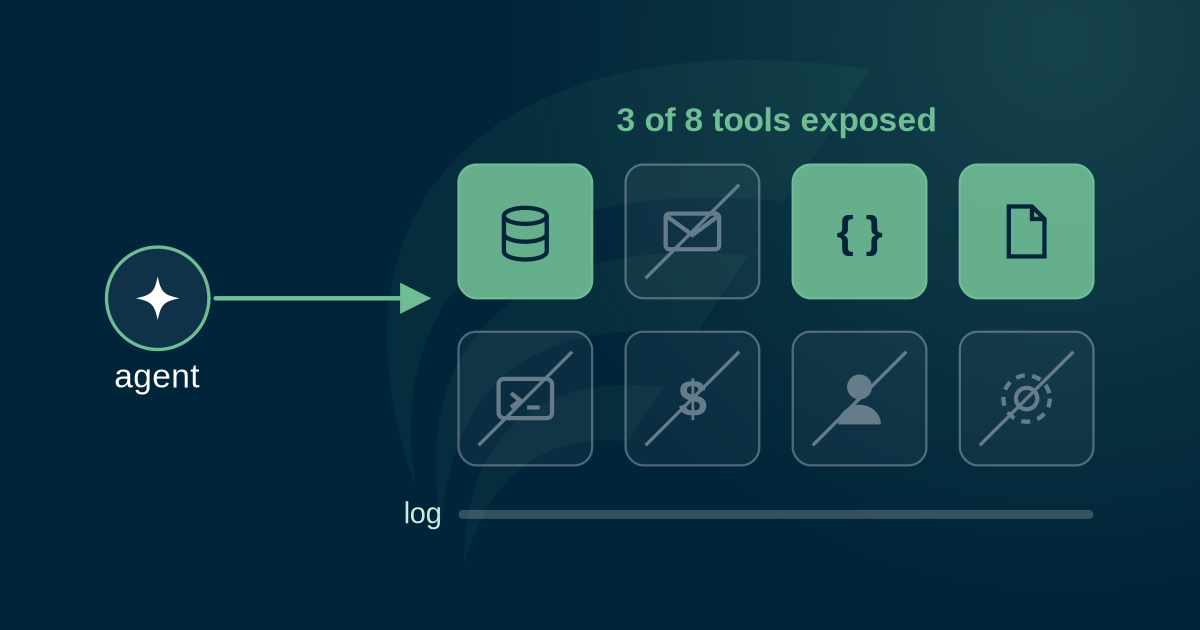
Two controls apply these choices. MCP server portals, generally available since 24 September 2026, expose only the tools you approve. They can also reach private MCP servers that stay off the Internet, a capability added on 22 September. Our guide to securing an MCP server in production goes further. Data loss prevention (DLP) inspects traffic to AI tools, prompts included: see our DLP service.
The first system, read or write, and the data categories each model may receive.
What must be logged, and who reads it?
An auditor will ask: who, or what, did what, on whose behalf? A usable trace holds three things. The intent: the request the agent received. The action: the tool called and its parameters. The result. Without the intent, you know a record changed, not why.
MCP server portals log each tool call. Exporting those logs to your security information and event management system (SIEM) through Logpush is reserved for Enterprise plans (changelog, 27 February 2026). Keep the logs as long as your audit obligations require, and name the person who reviews agent activity. AI security posture management is where that review usually lives.
What a trace contains, where it is kept and for how long, and who reads it.
Who pays for the tokens, and who can stop the spend?
An agent that loops, retries or calls a large model for a simple task spends quietly until the invoice arrives. Decide who carries the budget for each team, what happens when it runs out, and which tasks justify an expensive model.
AI Gateway placed behind Cloudflare Access ties each model call to an authenticated user, with logs, routing and per-user limits (changelog, 5 August 2026). According to Cloudflare at Connect 2026, those budgets can be set per person or per team, per day, without handing an API key to anyone. Our pages on large language model (LLM) observability and AI cost governance cover the follow-up.
A budget owner per team, a cap per user or per agent, and what the agent does when it hits it.
What happens when an agent gets it wrong?
It will. A wrong update, a prompt injection, a loop that floods a system: these are expected failures, not edge cases. Existing incident procedures rarely say how to stop an agent.
That is why only one in five organisations has a plan they have tested. A response plan for agents answers four questions:
- Who stops one agent, and who stops all of them?
- How: revoke the token, remove a tool from the portal, block at the edge?
- Who is told, inside the organisation and outside?
- How do you reconstruct what happened, from the traces decided above?
Some regulated organisations ask to be able to suspend all agentic activity at once. Our Cloudflare One page describes how that works.
Test the stop before go-live, not during the first incident. Revoke a test agent's credentials and time how long it takes for every call to fail.
Someone who can stop one agent or all of them, a method tested before go-live, and a written notification list.
Where will your teams build the agents they ask for?
Without a chosen platform, every team picks its own, and you end up governing several. This decision sets where your policies apply by default.
On Cloudflare, outbound traffic from Workers can go through Gateway with the VPC Network binding cf1:network (changelog, 5 June 2026): the same DNS, HTTP and network rules then apply to code and to employees. Gateway Forward, in public beta since 15 October 2026, adds your own business rules to the gateway; see Gateway Forward use cases. For the build itself, see our internal AI agent platform and custom application development. The wider frame is our AI security practice.
One platform where agents are built and run, with policies on by default.
How do you turn these answers into a plan?
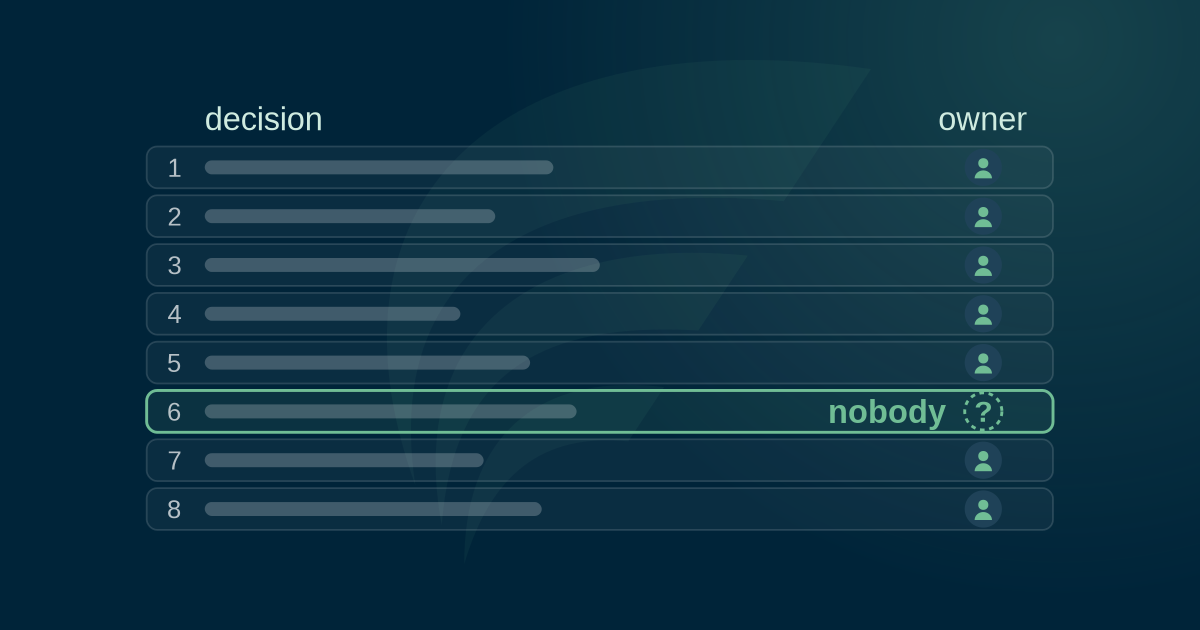
Put the decisions in one table. A row without an owner is the next thing to fix.
| Decision | Who settles it | Ready when | Cloudflare One control (status at 5 November 2026) |
|---|---|---|---|
| Business outcome | business sponsor, CIO | each agent project has an outcome and an owner | none: a governance decision |
| Inventory | CISO | the register matches what discovery finds | MCP traffic detection (beta), AI security report (available) |
| Delegation | CISO, identity team | each agent has an owner and a revocation path | Access, service tokens on MCP portals (available) |
| Systems and data | data owners, CISO | first system chosen, read or write decided, data mapped to models | MCP server portals (available), DLP (available) |
| Traces | CISO, SOC | intent, action and result logged, kept and reviewed | per tool call logs (available), Logpush (Enterprise) |
| Spend | CIO, finance | a budget owner and a cap per team or user | AI Gateway with Access identity (available) |
| Failure | CISO | stop tested, notification list written | revocation, tool removal from the portal, Gateway rules (available) |
| Platform | CTO, platform team | one place to build, policies on by default | Workers egress through Gateway (available), Gateway Forward (public beta) |
Your AI agent readiness checklist: eight decisions, an owner for each, and the control that enforces it. SOC stands for security operations centre.
The work then follows a sequence: an assessment that lists and ranks your AI initiatives, then governance and guardrails, then permissions, then the build, then operations. Cloudflare also presented Zero Trust applied to agents' actions, beyond their access, at Connect 2026, as a direction without a date. Plan with what is available today.
An AI agent governance framework is the set of decisions an organisation makes before AI agents reach its systems: which agents exist, on whose behalf they act, which systems and data they may reach, what they record, what they may spend and how they are stopped.
This is the work our Cloudflare engineers do with you. They run the assessment, then deploy and operate the controls: 450+ projects delivered, ISO/IEC 27001:2022 certification, 24/7 operations from our hubs in Paris, Dubai, Singapore, Casablanca and Zurich. After go-live, our managed services keep the table current.
AI agent governance framework: frequently asked questions
An AI agent governance framework is the set of decisions an organisation makes before AI agents reach its systems: which agents exist, on whose behalf they act, which systems and data they may reach, what they record, what they may spend and how they are stopped. Each decision has a named owner and a control that enforces it.
An enterprise is ready for AI agents when it can name every agent it runs, the person accountable for each, the systems and data it may reach, the record it leaves and the way to stop it. These are decisions, not product features.
At least the business owner, the identity the agent uses, the systems and data it reaches, whether it reads or writes, the models it calls and where its logs go. Starting from the credentials issued (API keys, OAuth applications, service tokens) rather than from declared projects surfaces the agents nobody registered.
It depends on the agent. A delegated agent acts with the user's rights and inherits their excesses; a service identity allows a narrower scope but needs a trace back to whoever triggered the action. Either way, one person answers for the agent and someone can revoke its access at any hour.
Yes, if you prepare for it. Block MCP traffic that doesn't go through an approved portal, revoke service tokens and remove tools from the portal. Test the stop before go-live, not during the first incident.
An assessment lists and ranks your AI initiatives, checks each against the eight decisions, and identifies the rows without an owner or a control. The result is the eight-decision table filled in for your organisation, with the order of work: governance and guardrails, permissions, build, operations.