At Connect 2026 in San Francisco, Cloudflare built everything around one idea: the web is now built for AI agents as much as for people. Here is what was announced, what you can use today, and what it means for your security roadmap.
Cloudflare Connect 2026 was Cloudflare's annual conference, held in San Francisco in October 2026. Its theme was the agentic internet: a web where AI agents act on behalf of people, run on one network and fall under the same security rules. The main security announcements covered Cloudflare One, AI agent controls, exploitation speed and post-quantum encryption.
Those announcements were spread across the opening keynote, the sessions, Cloudflare's blog and its changelog, at very different stages of maturity. At Brixio we deploy and run these products for our clients, so we sorted them. For each announcement, we give its status on 4 November 2026 and a link to Cloudflare's own documentation. Figures quoted on stage are Cloudflare's.
What was Cloudflare Connect 2026 about?
We came back from San Francisco with one idea in mind: Cloudflare no longer designs its platform for people alone.
Matthew Prince, Cloudflare's CEO, opened with a simple observation. Web traffic was flat from 2012 to 2025. Since mid-2025 it has been growing again, driven by people who build without writing code and by AI agents.
Stephanie Cohen, Cloudflare's Chief Strategy Officer, explained why that matters for the network: a model decides, an agent acts. Deciding is a GPU problem; acting is a CPU and network problem. Her example: in 1.5 seconds, an agent can complete 30 calls at 50 ms each when it runs close to the user, against 5 calls at 300 ms from a region further away. Cloudflare summed up its thesis in one line: "One network, one platform, available everywhere. Built for humans, ready for agents."
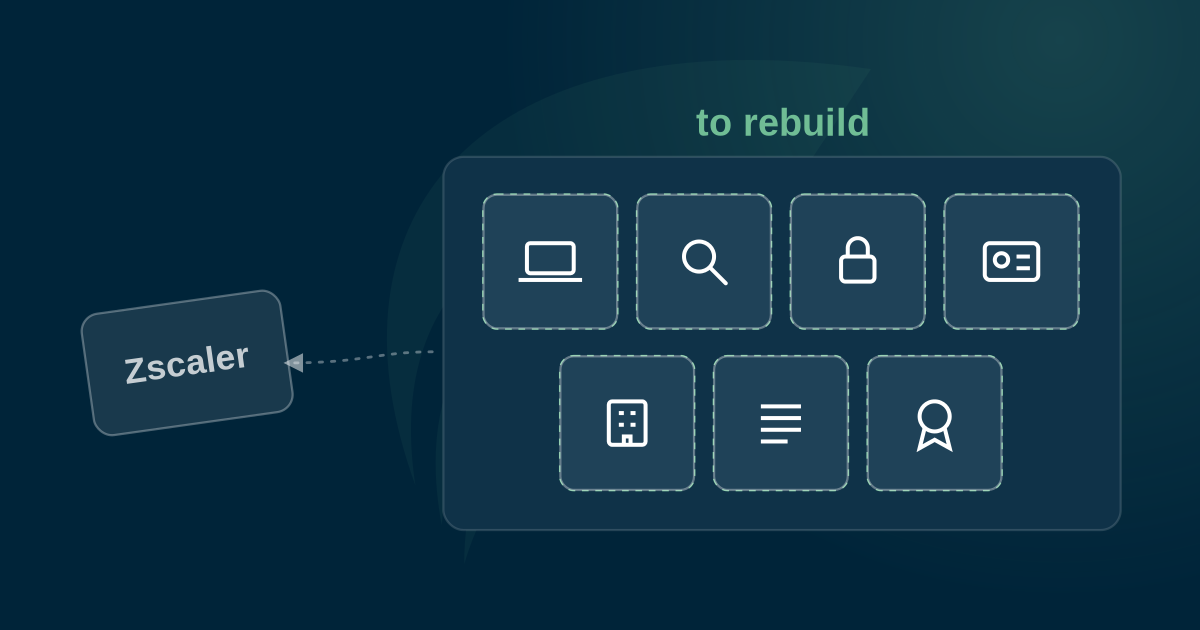
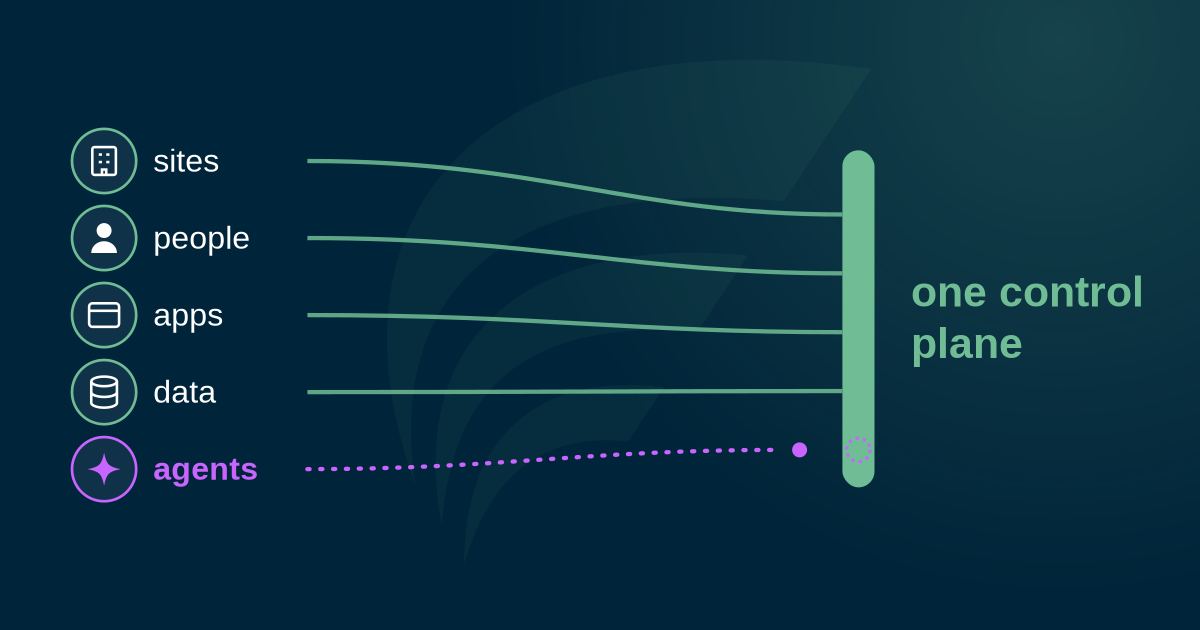
For a security team, the consequence is direct. The same rules now have to cover people, the agents acting for them and the code running on Workers. We cover each of those layers on our Cloudflare One page.
Which figures did Cloudflare share on stage?
| Figure | What it measures |
|---|---|
| 600B+ | requests made by AI agents on the network last quarter |
| < 1 in 10 | automated requests come from a bot that identifies itself |
| 310B | attacks per month on average this year, +63% vs 190B last year |
| 100% | of on-ramps for Edge, CDN and Cloudflare One are post-quantum today |
| 10M+ | developers on Cloudflare |
| ~600 Tbps | network capacity (250 Tbps two years ago) |
Source: Cloudflare, Connect 2026 opening keynote, 20 October 2026. Figures as stated on stage.
Two of these figures speak directly to security teams. The 310 billion attacks per month show the scale a network has to absorb before traffic even reaches your applications. The 100% of on-ramps means that traffic entering Cloudflare is already protected against harvest-now, decrypt-later attacks, without upgrading each application.
What changes when AI agents become the web's main users?
According to Cloudflare, automated traffic will overtake human traffic in the first half of 2027. Extrapolated over five years, agentic traffic reaches 1,000 times human traffic.
The growth isn't evenly shared. Human traffic is up by more than half since early 2025, while automated traffic has doubled. An agent checks hundreds of shops, one of them converts, and the others carry the cost of the visit.
Cloudflare's answer has two parts. First, cut the load: tell crawlers which pages have changed, so they stop fetching the rest. Then, price what's left, with Pay Per Crawl and x402 payments (built on the HTTP 402 status code). Matthew Prince put it in one sentence: "We cut the load and price what's left."
On stage, Shopify showed UCP (Universal Commerce Protocol), on by default for every merchant: the agent shops, and the merchant's own checkout and rules still apply. For your public sites, our web application and API protection covers the controls that apply today.
What changes for Zero Trust and Cloudflare One?
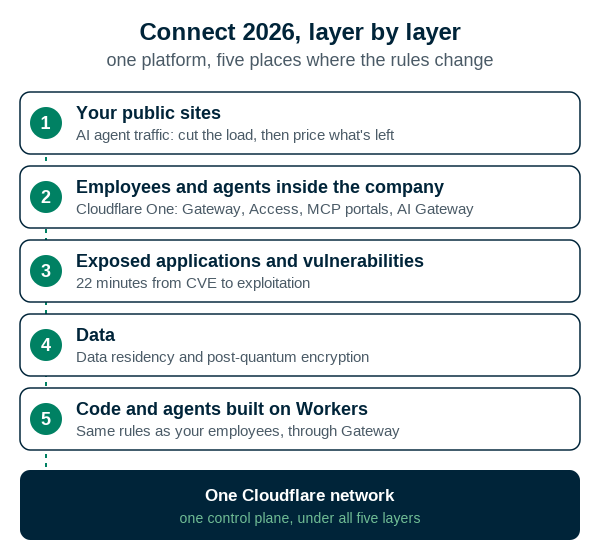
At Connect 2026, Cloudflare presented AI security as a pillar of Cloudflare One. Since 15 October 2026, Gateway can forward allowed HTTP traffic to a Worker, in public beta. MCP (Model Context Protocol) server portals have been generally available since September 2026, and AI Gateway can attribute each model call to an Access identity. All of it runs on the same servers and control plane as Workers.
The model is changing too. Security used to ask who gets access to what; with agents, it has to ask what the agent does, and on whose behalf. Zero Trust applied to agents' actions was presented at Connect as a direction, with no date and no commitment yet.
Scottie Ray, Director of Cloudflare One Solutions Engineering, put the principle simply in his session "The SASE Power Play" at the Connect 2026 Global Partner Summit on 19 October: "Zero Trust, at the end of the day, is just least privilege on steroids." For his part, Grant Bourzikas, Cloudflare's security chief, predicts that the largest breaches will increasingly come from the inside out.
We list every 2026 change with its status, and what each one means in production, on our Cloudflare One page. See also our approach to agentic AI security and shadow AI detection, and the glossary entries for MCP and Zero Trust.
How fast are vulnerabilities exploited now?
According to Cloudflare at Connect 2026, 22 minutes separate the release of a CVE (Common Vulnerabilities and Exposures entry) from its exploitation, and more than 22 threat actors targeted an unpatched Citrix NetScaler remote code execution (RCE) flaw. Cloudflare's triage method: fix what is exploited, plan what is exploitable, schedule the rest.
Grant Bourzikas shared two more figures:
- 5x growth in Cloudflare's own bug reports, even after automation;
- 1.1 billion attacks handled during his presentation, with no human intervention.
The reason is AI on both sides. Models find bugs faster than teams can fix them. Attackers scan, build and exploit in minutes, while defenders still go through change management. Cloudflare also presented Security Insights, its internet-wide view of which vulnerabilities are actively exploited, to feed customers' vulnerability management.
For equipment you can't patch right away, Cloudflare showed a pattern that protects it while you prepare the fix. We describe it on our Cloudflare One page.
When exploitation takes minutes, protection has to come before the patch.
Run the three-step triage on your own backlog this week. Start with the vulnerabilities listed in the Known Exploited Vulnerabilities catalogue of CISA (the US Cybersecurity and Infrastructure Security Agency), plan the ones reachable from the internet, and schedule the rest.
Related: attack surface reduction · managed SOC on Cloudflare
Shield your Citrix and legacy remote access →
What did Cloudflare announce on data residency and post-quantum?
Cloudflare's promise is called "Region: Earth": deploy once, then choose where data is processed, stored and logged.
The building block behind it is the Data Residency Architecture, in private beta. Cloudflare rebuilt its control plane and logging systems on Workers and Durable Objects. A Worker, a rule or a Durable Object can run everywhere or be pinned to a jurisdiction, and according to Cloudflare, moving it is "a click", not a regional re-architecture.
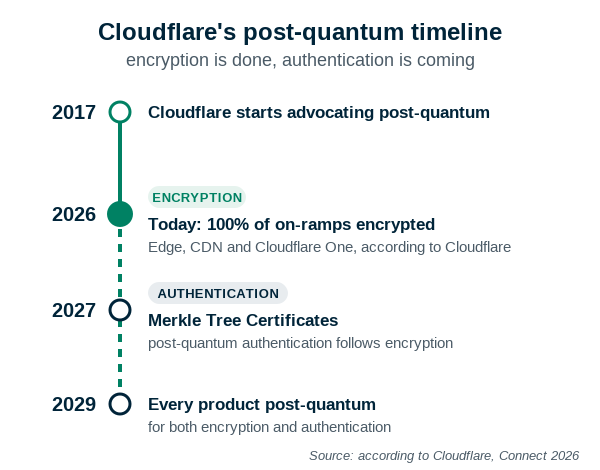
On post-quantum, according to Cloudflare:
- 100% of on-ramps for Edge, CDN and Cloudflare One are protected with post-quantum encryption today;
- post-quantum authentication comes next, with Merkle Tree Certificates in 2027;
- every product will be post-quantum for both encryption and authentication by 2029.
A private beta doesn't belong in a compliance file. What you can rely on today to prove where your data is processed, through the Data Localization Suite, is described on our Cloudflare One page. For the wider picture, see our approach to cloud data sovereignty, our post-quantum readiness service, and the glossary entries for post-quantum cryptography and data residency.
What did Cloudflare ship for developers and AI teams?
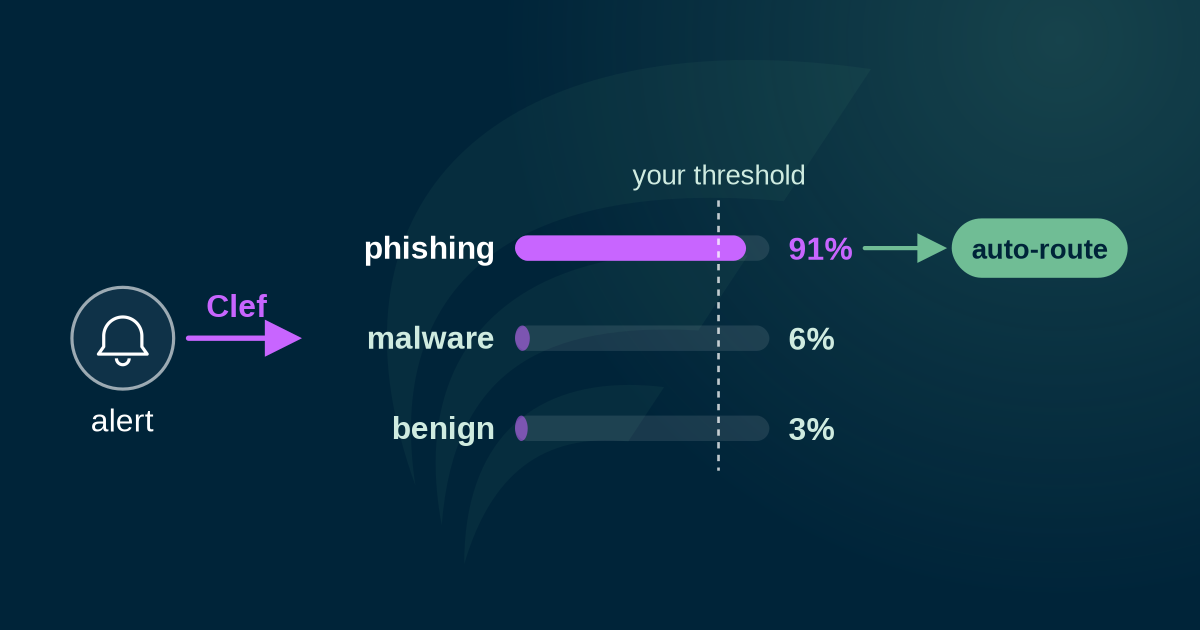
- Clef and Clef-flash, decision models on Workers AI, available since 1 October 2026. Instead of generating text, they return a probability for every allowed answer: useful for alert triage and ticket routing. Open weights under Apache 2.0.
- Clairic, an extraction model, in preview since 19 October 2026. It returns typed values (numbers, dates, durations, estimates) read from text and images, without generating tokens.
- Cloudflare OS, an open-source AI workspace under the Apache 2.0 licence (GitHub repository).
- Dynamic Workers and Sandboxes: isolated execution environments, one per agent task.
- Vite and VoidZero: according to Cloudflare at Connect 2026, the team behind the Vite toolchain is building native deployment on Cloudflare, and the tools stay open source.
- Agent CI/CD and observability: a direction presented on stage, where agents decide what to test and one trace covers human and agent actions. No product name yet.
Also on stage, according to Cloudflare: Deutsche Telekom announced a direct interconnection between the two networks and work with Cloudflare on European sovereignty, and Oracle Cloud Infrastructure uses Magic Transit as an outer DDoS layer in front of its cloud.
The link with security is simple. An agent built on Workers falls under the same rules as your employees, as long as its traffic goes through Gateway; we explain how in the "secure and build" section of our Cloudflare One page. See also custom application development, AI security and LLM observability.
What should security teams do now?
A lot of this is what we've been waiting to deploy with our clients. Not all of it is ready for production, though. Here is how we sort it.
Statuses as of 4 November 2026.
| Announcement | Status | What to do | Go further |
|---|---|---|---|
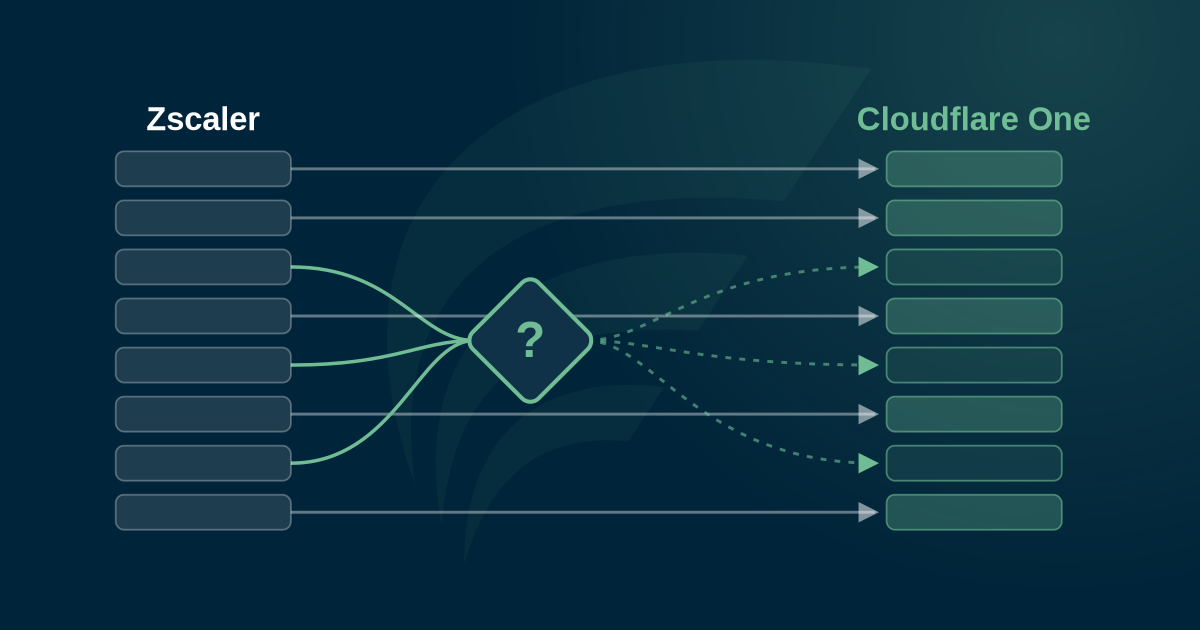
| Gateway Forward (programmable Gateway) | Public beta, all Zero Trust plans (changelog, 15 Oct 2026) | Prepare | Cloudflare One |
| MCP server portals | Available (changelog, 24 Sep 2026) | Today | Cloudflare One |
| AI Gateway with Access identity | Available (changelog, 5 Aug 2026) | Prepare | LLM observability |
| MCP traffic detection | Beta (changelog, 12 Aug 2026) | Today, in log mode | Shadow AI detection |
| Zero Trust applied to agents' actions | Direction presented at Connect 2026 | Watch | Agentic AI security |
| Zero Trust dashboard merged | Available (changelog, 12 Oct 2026) | Today (procedures) | Cloudflare One |
| Access in front of an unpatched Citrix | Pattern presented at Connect 2026 | Today | ZTNA solutions |
| Post-quantum on-ramps | According to Cloudflare, 100% today | Check your scope | Post-quantum readiness |
| Data Residency Architecture | Private beta | Watch | Data sovereignty |
| Clef and Clairic on Workers AI | Clef available (1 Oct), Clairic in preview (19 Oct) | Test | Managed SOC |
| Cloudflare OS | Open source, Apache 2.0 (GitHub) | Test | AI security |
Today. List your agents and the rights they hold. Route MCP traffic through a portal. Protect the remote access you can't patch yet. Update your written procedures and screenshots for the merged dashboard (12 October 2026).
Prepare. Business rules in Gateway Forward, while it is in public beta. Identity in AI Gateway, to track AI spend by team.
Watch. The Data Residency Architecture (private beta), Zero Trust applied to agents' actions (direction) and Merkle Tree Certificates (2027).
AI opens the conversation, but most first projects are still DNS filtering, VPN replacement, data protection and email security. Our Cloudflare One page explains where to start. For OT sites, Brixio delivers secure remote access on Cloudflare Zero Trust, site by site and as a managed service, with the segmentation and IT/OT design that decide what is inspected and where, and a local gateway that can fail over. We set out what Cloudflare One covers, and where we design around it, on the same page.
Brixio deploys and runs Cloudflare 24/7 from Paris, Dubai, Singapore, Casablanca and Zurich, with more than 450 projects delivered. More about us as a Cloudflare operations specialist, and about our assessments, professional services and managed services. To see how this fits a wider programme, read about managed SASE and securing an MCP server in production.
Start now, away from critical paths. Turn on MCP detection in log mode and write your first Gateway Forward rules on a narrow scope: your teams get to grips with these capabilities, and your policies will be ready when they become generally available. Follow Cloudflare's changelog to adjust them.
Cloudflare Connect 2026: frequently asked questions
Cloudflare Connect 2026 took place in San Francisco, at Moscone West, from 19 to 21 October 2026. The opening keynote was on 20 October 2026.
The agentic internet: one network and one platform to build, run and secure AI agents, with the same security rules for people and for the agents acting on their behalf.
No. Gateway Forward has been in public beta since 15 October 2026, on all Zero Trust plans, according to the Cloudflare changelog. Its status and what it makes possible are covered on our Cloudflare One page.
Cloudflare presented AI security as a pillar of Cloudflare One: MCP server portals, AI Gateway tied to identity, and MCP traffic detection (in beta). Zero Trust applied to agents' actions was presented as a direction. Details and statuses are on our Cloudflare One page.
According to Cloudflare, 100% of on-ramps for Edge, CDN and Cloudflare One are protected with post-quantum encryption today. Authentication follows, with Merkle Tree Certificates in 2027 and every product by 2029.
Yes. The sessions are available on demand on cloudflare.com/connect.