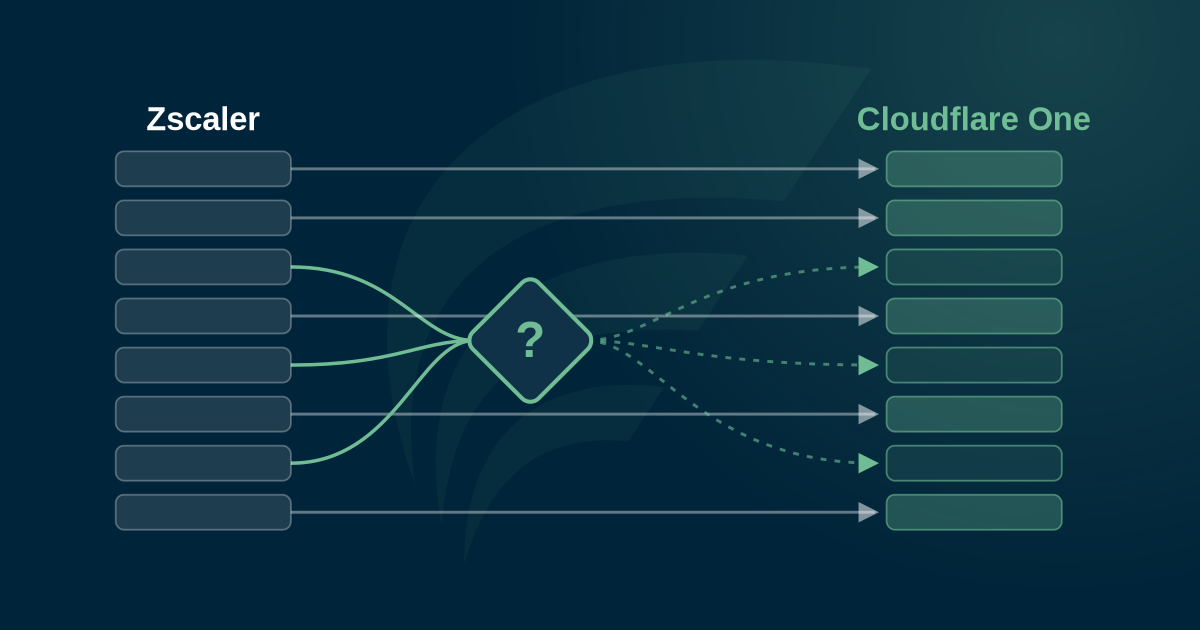
There is no single Zscaler alternative. Cato Networks, Cisco, Cloudflare, Fortinet, Microsoft, Netskope and Palo Alto Networks each answer a different reason to leave. The deciding factor is less the replacement's feature list than what the switch makes you rebuild: inspection rules, private application access, identity mapping and logging.
If you run Zscaler, you don't have a vendor shortlist problem. You have agents on every laptop, years of inspection exceptions, connectors in your data centres and a contract with a date on it. The useful question isn't which platform scores highest. It's what you are trying to fix, and what leaving would make you rebuild.
This article helps you decide whether to leave and where to look. If you have already chosen Cloudflare One, our Zscaler to Cloudflare One migration guide goes through the move object by object.
Why do organisations look for a Zscaler alternative?
The organisations we meet rarely leave because of a single event. They chose Zscaler for good reasons, at a time when those reasons held, and what usually changes is the context around the platform, not the platform. Five situations come up.
The first is a contract coming to an end. A renewal is when the question gets asked, whether or not anything is wrong.
The second is a wish for fewer vendors. A security team that already runs a firewall range, an identity platform or a network from one vendor may want its secure access from the same one, for a single console and a single contract.
The third is a change of scope. An acquisition brings sites and users on another stack. A new region comes with its own data rules. An industrial estate joins the perimeter. Or the board asks for control over how employees and agents use AI tools. The platform chosen five years ago was sized for a different organisation.
The fourth is a licence model that no longer fits. Counting by named user works well for a stable workforce. It fits less well when the workforce rotates, when contractors come and go, or when a growing share of traffic comes from service accounts and AI agents rather than people.
The fifth is a shift in architecture preference. Some teams want networking and security in one service, others want secure access built on their firewall range, others want the security edge kept separate from the network. None of these is wrong; they lead to different shortlists.
Most organisations have more than one of these reasons, but one usually carries the decision. A quick way to find it is to ask who started the conversation. If it was procurement, the reason is probably the contract or the licence model. If it was the network team, it is often architecture or sites. If it was the board or the data protection officer, it is usually scope: a new region, an acquisition, AI use. Write that reason down before looking at any vendor: it is the filter you will apply to the table further down.
When is staying with Zscaler the better decision?
Leaving Zscaler is the wrong lever when the only reason is price, when the current model fits the need and runs without difficulty, or when the switch would coincide with a directory overhaul, a mail migration or a merger. In those cases, renegotiating or postponing is usually the better decision.
Price first. If cost is the only complaint, it is a contract question before it is an architecture question: scope, sizing and the modules you actually use can all be renegotiated. A migration costs more than its licence line suggests, in engineering time, in rebuilt rules and in a period when two platforms run at once. The inventory in the next section is useful here too: knowing which modules, sites and users you really rely on is what gives a renegotiation its weight.
Fit second. If the platform covers what you need today and your team runs it without struggling, a switch brings risk without a reason. A good renewal is a valid outcome of a vendor review.
Timing third. A secure access migration touches every laptop, every private application and every log pipeline. Running it while the directory is being rebuilt, the mail system moved or two companies merged means two projects competing for the same people and the same change windows. Waiting until those projects close is usually cheaper.
Before you decide to leave, price the rebuild, not the licence: the inspection exceptions and the private-access segmentation are where the time goes.
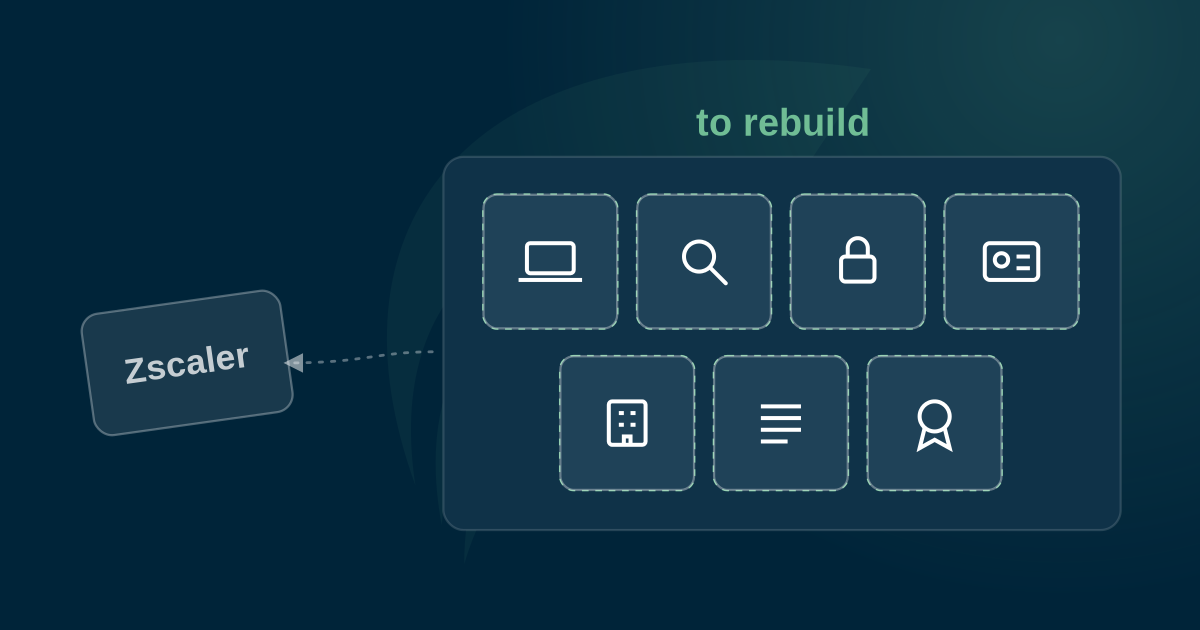
What does leaving Zscaler make you rebuild?
Seven things, whatever the destination. Each one is described here by function, in Zscaler's own vocabulary where a Zscaler object is meant, so the table stays true for any replacement.
| What | What is in place | What has to be redone | What breaks if you forget it |
|---|---|---|---|
| Endpoint agent | Zscaler Client Connector on every managed device, with its forwarding profile | deploy the new agent, its profiles and its tunnel exclusions, then remove the old one | users lose access, or traffic leaves uninspected through a leftover exclusion |
| Filtering and inspection | URL and firewall rules, custom categories, SSL/TLS inspection exceptions, DLP dictionaries and policies | rebuild rules, lists and exceptions, recreate data loss prevention (DLP) profiles | a business application that only worked thanks to an exception stops working |
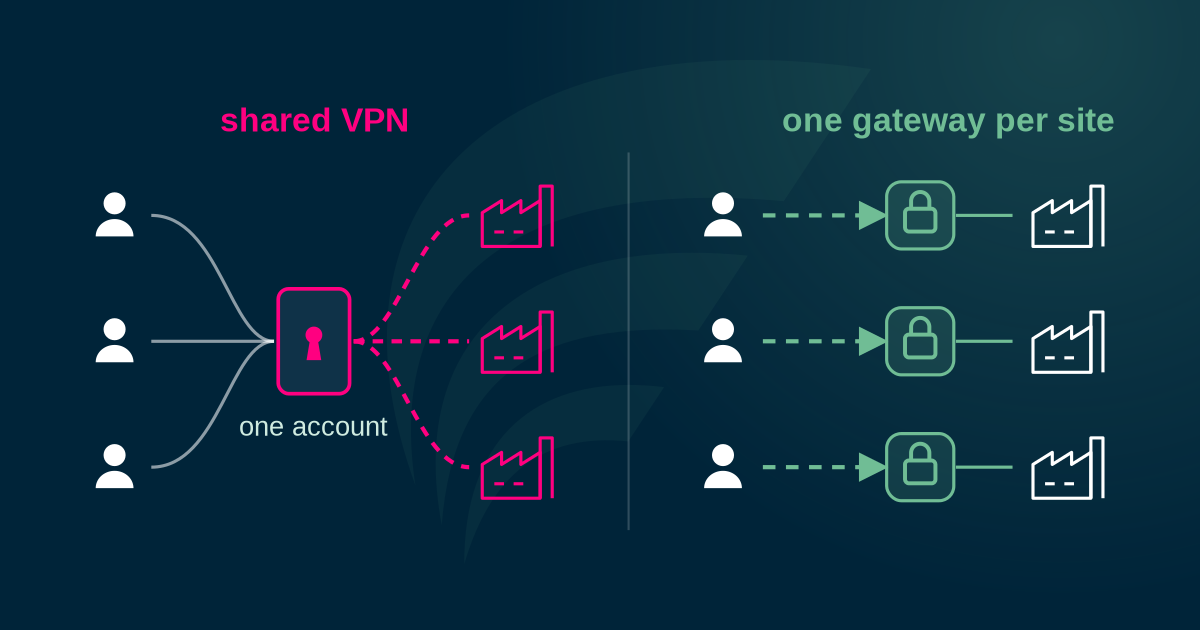
| Private application access | application segments, server groups, App Connector groups, access policies | rebuild application definitions, connectors and access rules on the new platform | an application nobody listed becomes unreachable, or reachable by too many people |
| Identity | identity provider integration, user and group provisioning, groups used in rules | reconnect the directory, provisioning and group mapping | group-based rules apply too widely, or not at all |
| Sites | locations and GRE or IPsec tunnels from offices and data centres | rebuild site connectivity to the new service | a site loses Internet access, or its traffic stops being filtered |
| Logging | log streaming to your security information and event management (SIEM) system, with detection rules and dashboards | connect the new log source, rewrite parsers, detections and dashboards | detection goes quiet on the new platform and nobody notices |
| Certificate authority | the certificate authority deployed on devices for TLS inspection | deploy the new one, then remove the old one from every device | inspection fails on devices without the new root, or the old root stays trusted |
TLS is transport layer security, the protocol that encrypts web traffic. Zscaler objects named as in the Zscaler Help documentation (Client Connector, application segments, server groups, App Connector groups, locations, GRE tunnels, SSL/TLS inspection, DLP).
The first two rows are where most of the effort goes. A secure web gateway rule set that has run for years carries exceptions that exist for a reason nobody wrote down, and private access, the ZTNA part, has to be mapped application by application. The last row is the one most often left for later, and it is the one that stays behind on every laptop.
Each row also has an owner, and they are rarely the same person. The endpoint agent belongs to the workplace team, inspection and DLP to security, private access to the application owners, identity to the directory team, sites to the network team, logging to the security operations centre (SOC) that runs your SIEM. Naming them before the decision tells you how many teams a switch mobilises, which is often a better predictor of effort than the number of rules.
Inventory the exceptions first. Years of bypass entries and inspection exemptions are the part of a Zscaler estate that no tool lists for you.
Who are Zscaler's main competitors, and which reason to leave does each answer?
Zscaler's platform covers Internet and SaaS access (Zscaler Internet Access, ZIA) and private application access (Zscaler Private Access, ZPA), delivered from its cloud. Its competitors package these functions differently. Here are seven vendors to consider, some offering a security service edge (SSE), others a full secure access service edge (SASE) that includes networking. The table lists them in alphabetical order, with the scope each one publishes and the situation it tends to answer. It is not a ranking, and there are no scores: the right line depends on your reason to leave.
| Vendor and offer | Scope published by the vendor | Reason to leave it tends to answer | Source |
|---|---|---|---|
| Cato Networks, Cato SASE Cloud Platform | SASE platform converging networking and security in one cloud-native service: next-generation firewall (NGFW), secure web gateway (SWG), cloud access security broker (CASB), DLP and zero trust network access (ZTNA) under a single policy engine, on Cato's own global network of points of presence | networking and security wanted in one service, including for sites | Cato Networks |
| Cisco, Cisco Secure Access | cloud-delivered SSE grounded in Zero Trust, integrated with Meraki software-defined WAN (SD-WAN) | consolidation for organisations that already run Cisco networking or security | Cisco |
| Cloudflare, Cloudflare One | SASE platform: ZTNA, SWG, CASB, network as a service and firewall as a service, covering employees, AI agents and infrastructure | a change of scope towards governing AI tool and agent use | Cloudflare |
| Fortinet, FortiSASE | cloud-delivered secure Internet, private and SaaS access; Unified SASE integrates SD-WAN with cloud security from one vendor, and existing Fortinet customers can extend their firewall estate to it | secure access in the same family as an existing FortiGate firewall estate | Fortinet |
| Microsoft, Microsoft Entra Internet Access and Microsoft Entra Private Access (Global Secure Access) | Microsoft's security service edge, tied to Microsoft Entra identity and conditional access, alongside Defender for Cloud Apps as CASB | consolidation for organisations standardised on Microsoft 365 and Entra | Microsoft Learn |
| Netskope, Netskope One | converged security and networking: SSE and SASE, with data and threat protection for cloud services, websites, AI and private applications, and secure SD-WAN | data protection on SaaS and AI use as the main driver | Netskope |
| Palo Alto Networks, Prisma SASE | SASE converging network security, SD-WAN and digital experience management in the cloud, from a vendor that also sells next-generation firewalls | consolidation with an existing Palo Alto Networks firewall estate | Palo Alto Networks |
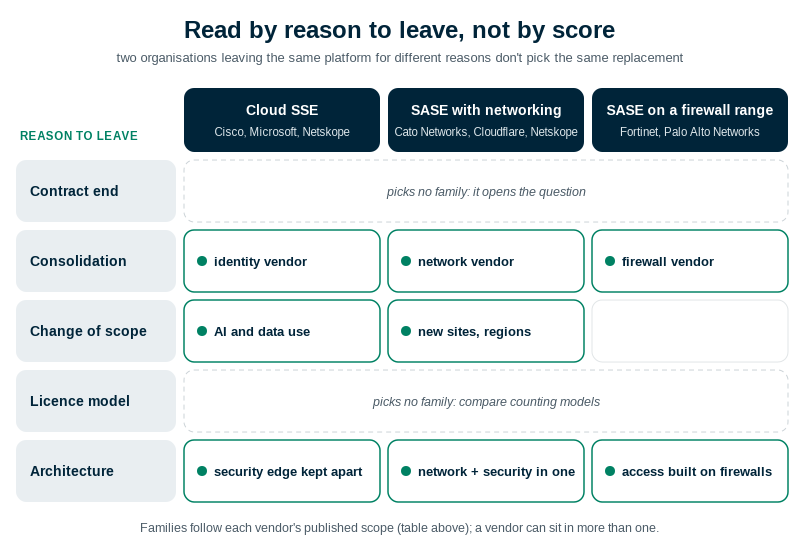
Read the table by reason, not from top to bottom. Two organisations leaving the same platform for different reasons will not end up with the same replacement: one moving to Microsoft 365 everywhere has little in common with one merging its firewall and access contracts, or with one bringing industrial sites into the perimeter. Each "scope" cell repeats what the vendor publishes on the page linked; nothing in it is our assessment of how well the product works.
The column on the right also explains why there is no winner. Vendor consolidation points to whoever already runs your firewalls, identity or network. A change of scope points to whoever covers the new perimeter. An architecture preference points to a family of offers rather than a name. For the access side on its own, our ZTNA solutions page explains what replacing private access involves.
To go from the table to a shortlist of two or three, keep it simple. Start from the reason you wrote down and keep the vendors whose right-hand cell matches it. Check the scope against what you actually run today: if you filter traffic from sites, a security edge without networking means keeping a separate network service. Then send each remaining vendor the seven rows from the previous section and ask how they would rebuild each one, with what tooling, and what they would leave to you. The answers say more about the switch than any feature list.
What does a switch involve in practice?
Four things hold whatever you choose.
Identity comes before access. Every rule that names a group depends on the directory and the provisioning feeding the new platform; connect and test that first, with real users, before moving any application.
Both platforms run side by side for a while. Users and sites move in groups, and the rest stays on Zscaler until the last group has moved and the decommissioning criteria are met. Plan for two consoles, two sets of logs and two support paths during that time.
Test on a group that is hard, not on a group that is easy. A pilot with ten people who only use webmail and a CRM proves little. Pick a group that uses one of the applications kept alive by an inspection exception, one private application behind a connector, and a site that sends traffic through a tunnel. If those work on the new platform, most of the rest will.
The log source changes. Detection rules, parsers and dashboards in your SIEM were written for Zscaler's format. Rewriting them is part of the migration, not something to do afterwards.
If Cloudflare One is your destination, our migration guide maps ZIA and ZPA object by object, with the cutover order and the decisions no tool makes for you.
Where is Cloudflare not the right answer?
Brixio delivers Cloudflare, so this section matters more than the others. In the 2026 Gartner Magic Quadrant for SASE Platforms (Jonathan Forest, Andrew Lerner, John Watts, 28 July 2026), Cloudflare is positioned as a Visionary, not a Leader (Cloudflare's announcement). Read the report for the criteria behind that position.
Two situations call for another answer. If you have a large, recent estate of physical firewalls under a long commitment, a secure access service from the same firewall vendor will usually fit better than adding a separate platform, at least until that commitment ends. And if part of your operations depends on old protocols that don't run over IP and need inspection on local hardware, a cloud-delivered service is the wrong place to enforce it.
The same honesty applies to timing. If your directory, your mail system or your company structure is about to change, the section on when to stay holds whichever platform you have in mind, Cloudflare included. If your only reason to leave is price, go back to that section too. For how we approach SASE more broadly, see our SASE and Zero Trust practice.
Who can help you decide, and run the result?
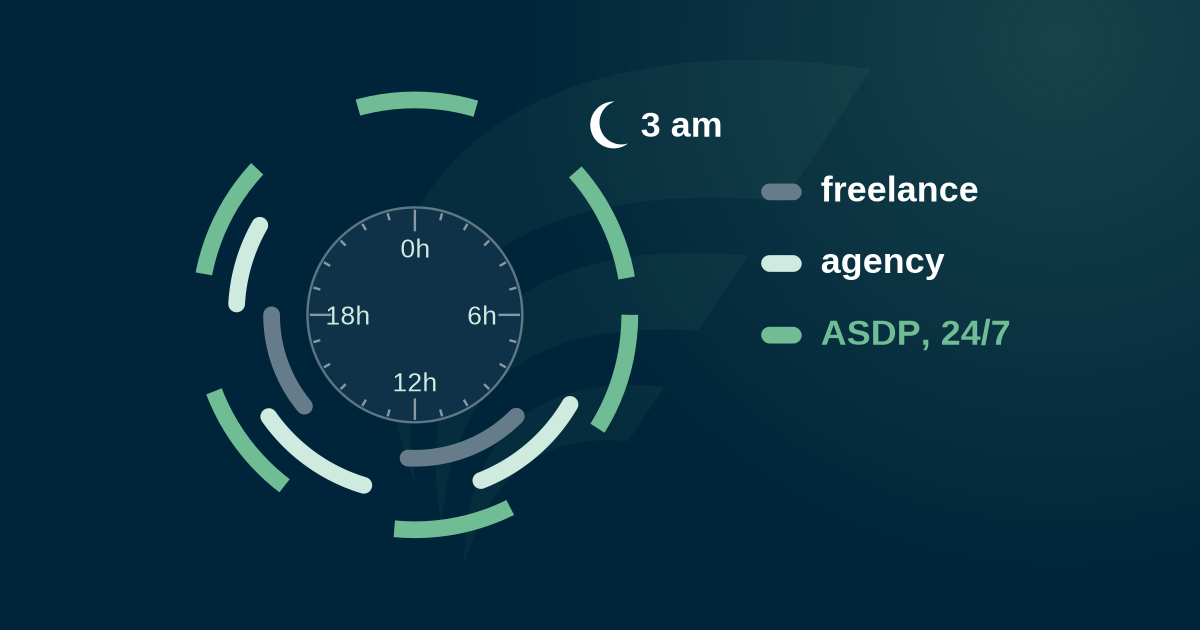
Brixio is a Cloudflare Authorized Service Delivery Partner (ASDP) and does not sell a competing platform. We scope the migration with you, then run the platform once you have switched: 450+ projects delivered, ISO/IEC 27001:2022 certification, 24/7 operations from Paris, Dubai, Singapore, Casablanca and Zurich. For a SASE deployment in production on Cloudflare, see our UAE driver education group case study.
A scoping starts from your exports, not from a slide deck. It produces the seven rows above filled in for your estate, with an owner for each, the exceptions nobody documented, and the order in which things would move. That document is useful whatever you decide: it is the same one you would need to renegotiate, to stay, or to brief another provider.
If you'd like an outside view before any decision, start with an assessment of your current estate.
Ask for a migration scoping of your Zscaler estate →
What breaks in a Zscaler exit is rarely the new platform. It is what nobody listed: inspection exceptions that kept a business application working, bypass entries added during an incident, detection rules written against the old log format, and the certificate authority still trusted on every laptop. Inventory those before you compare vendors.
Zscaler alternatives: frequently asked questions
The main ones are Cato Networks, Cisco, Cloudflare, Fortinet, Microsoft, Netskope and Palo Alto Networks, listed here in alphabetical order. They differ in scope: some offer a security service edge only, others full SASE with networking, others secure access built on their firewall range.
There isn't one in absolute terms. The right alternative depends on why you are leaving: vendor consolidation, a change of scope, the licence model or an architecture preference. In some cases, especially when the only reason is price, staying and renegotiating is the better decision.
Both offer cloud-delivered secure access for users. Cloudflare One delivers it from the same global network that runs Cloudflare's application security and developer platform, and describes itself as a SASE platform covering employees, AI agents and infrastructure. Zscaler delivers its secure access functions from its own cloud. For a side-by-side view, Cloudflare publishes its own comparison with Zscaler; bear in mind it is written by one of the two vendors.
Yes. Private application access is the most independent part of the estate and can move first: application definitions, connectors and access rules can move without touching Internet filtering. It still depends on identity, so the directory and group provisioning have to be connected to the new platform first.
It depends on the number of rules, private applications and sites, and on how many exceptions nobody documented. A realistic plan is set after an inventory of your estate, not before. Our migration guide describes the cutover order for Cloudflare One.
Yes, by group of users or by site: the groups that have moved use the new platform, the others stay on Zscaler until the decommissioning criteria are met. Our migration guide to Cloudflare One covers how to stage it.
Zscaler, ZIA and ZPA are trademarks of Zscaler, Inc. Other product names are trademarks of their respective owners.